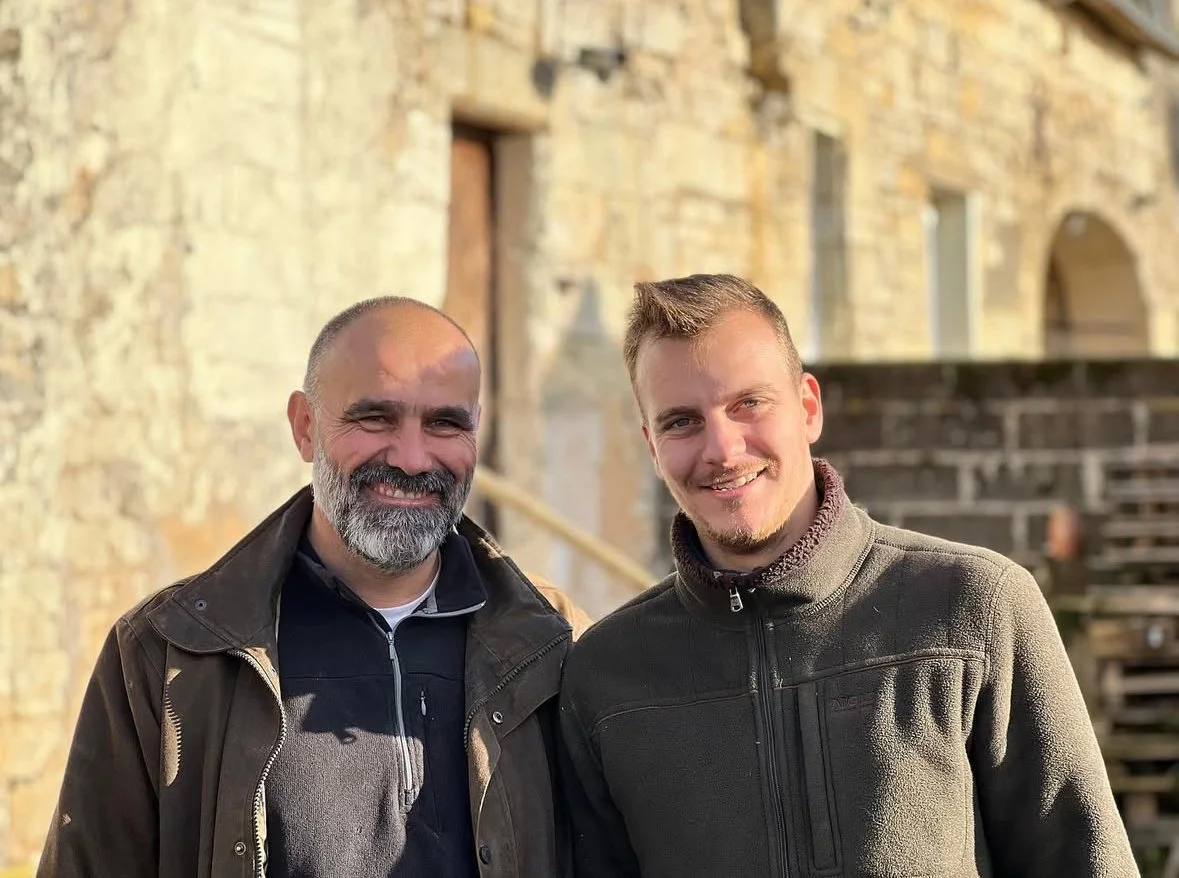
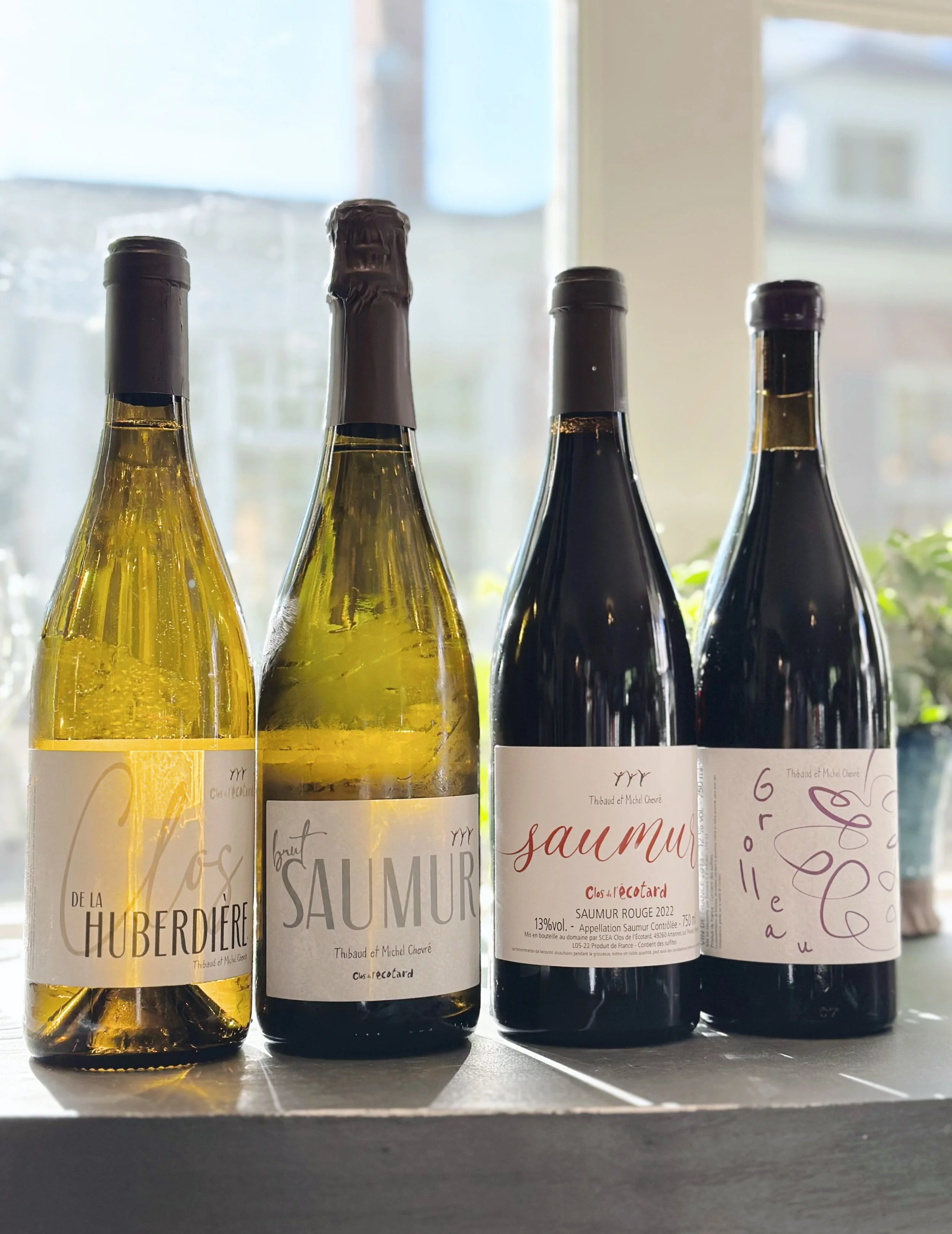
This father-and-son duo are true terroir explorers, working organically and biodynamically to craft the pure, refined expressions of local vineyards through indigenous grape varieties – with notable craftsmanship of single-vineyard Chenin Blancs “that rank amongst the finest in Saumur.”
Wines Currently Available
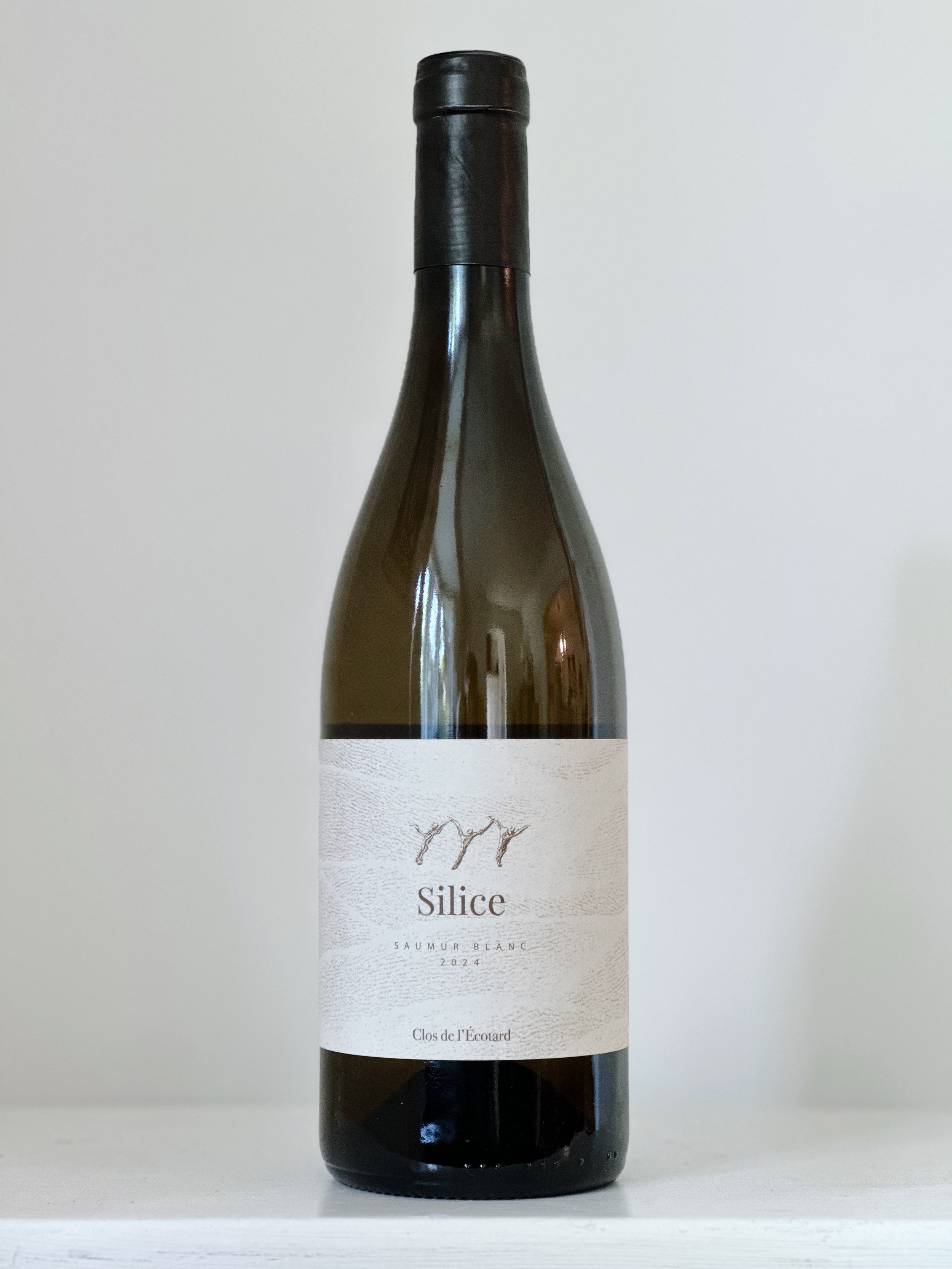
Configuration: (12 x 750mL)
Winery: Clos de l’Écotard
Appellation: Saumur, Loire Valley, France
Philosophy/Practices: Organic & biodynamic practices
Grape Variety: 100% chenin blanc
ABV: 11.5%
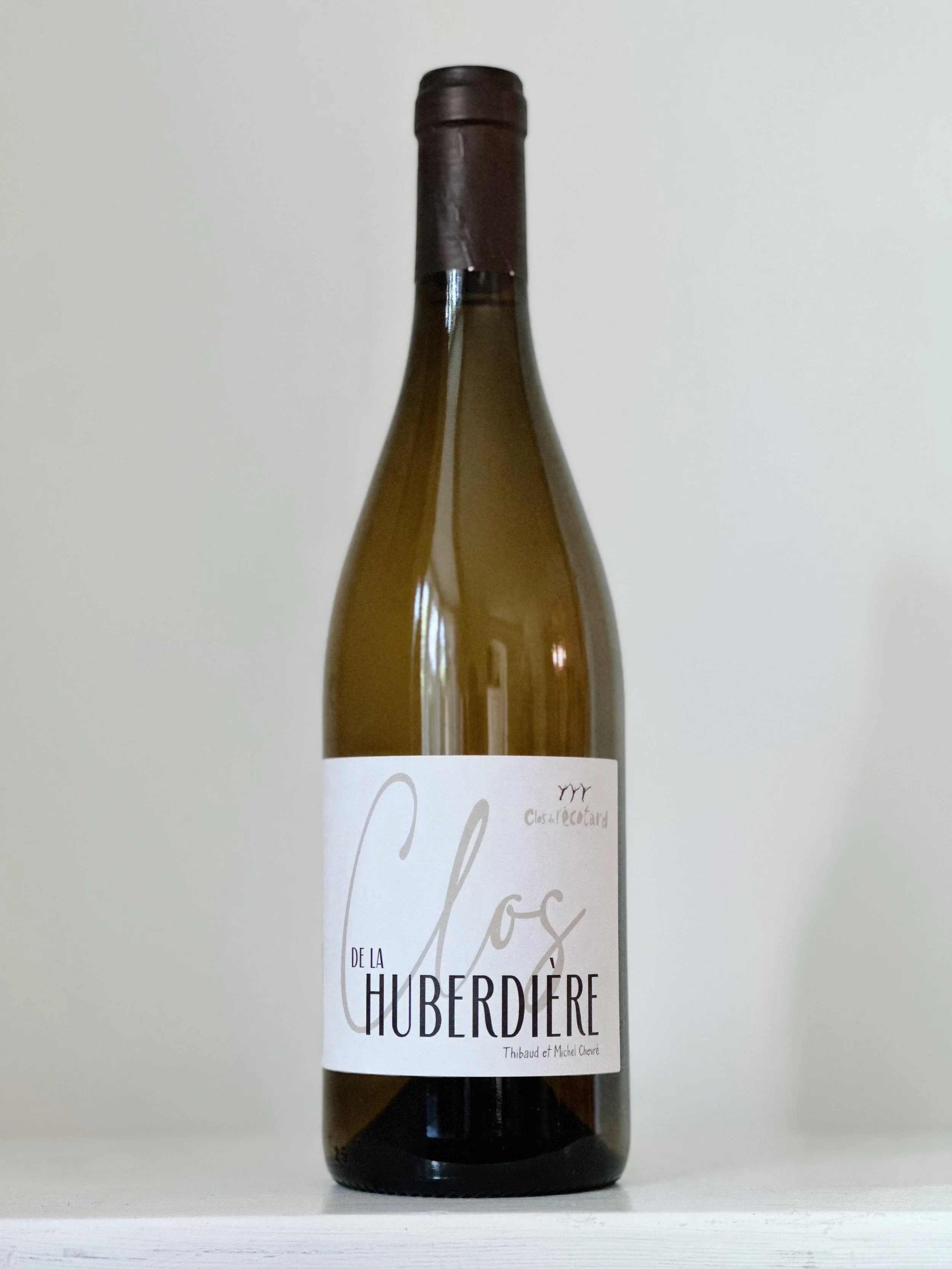
Configuration: (12 x 750mL)
Winery: Clos de l’Écotard
Appellation: Single vineyard: Clos de la Huberdière, Saumur, Loire Valley, France
Philosophy/Practices: Organic & biodynamic practices
Grape Variety: 100% chenin blanc
ABV: 12%
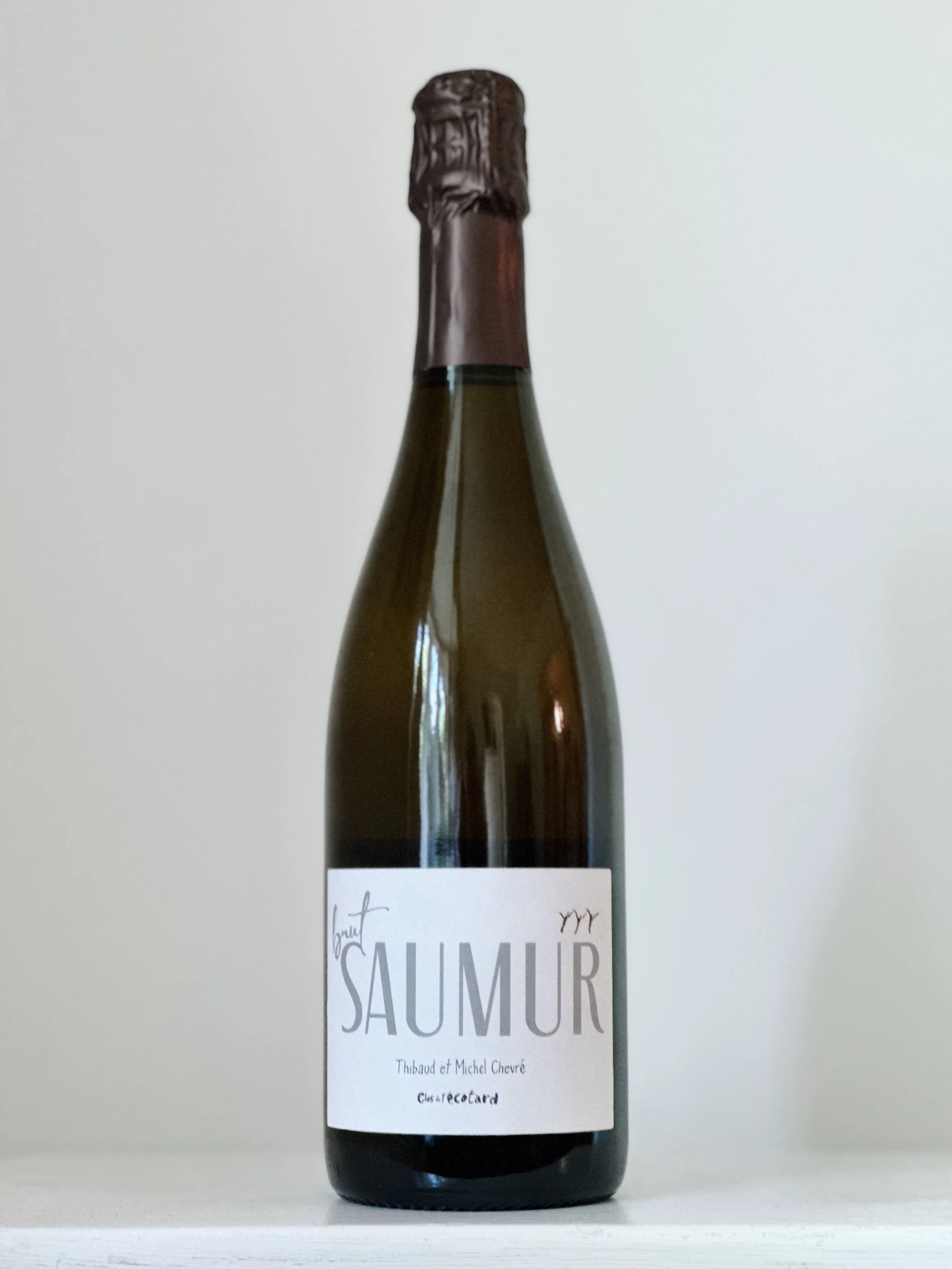
Configuration: (6 x 750mL)
Winery: Clos de l’Écotard
Appellation: Saumur, Loire Valley, France
Philosophy/Practices: Organic & biodynamic practices
Grape Variety: Chenin blanc, with a small percentage of grolleau gris and direct-press cabernet franc
ABV: 12.5%
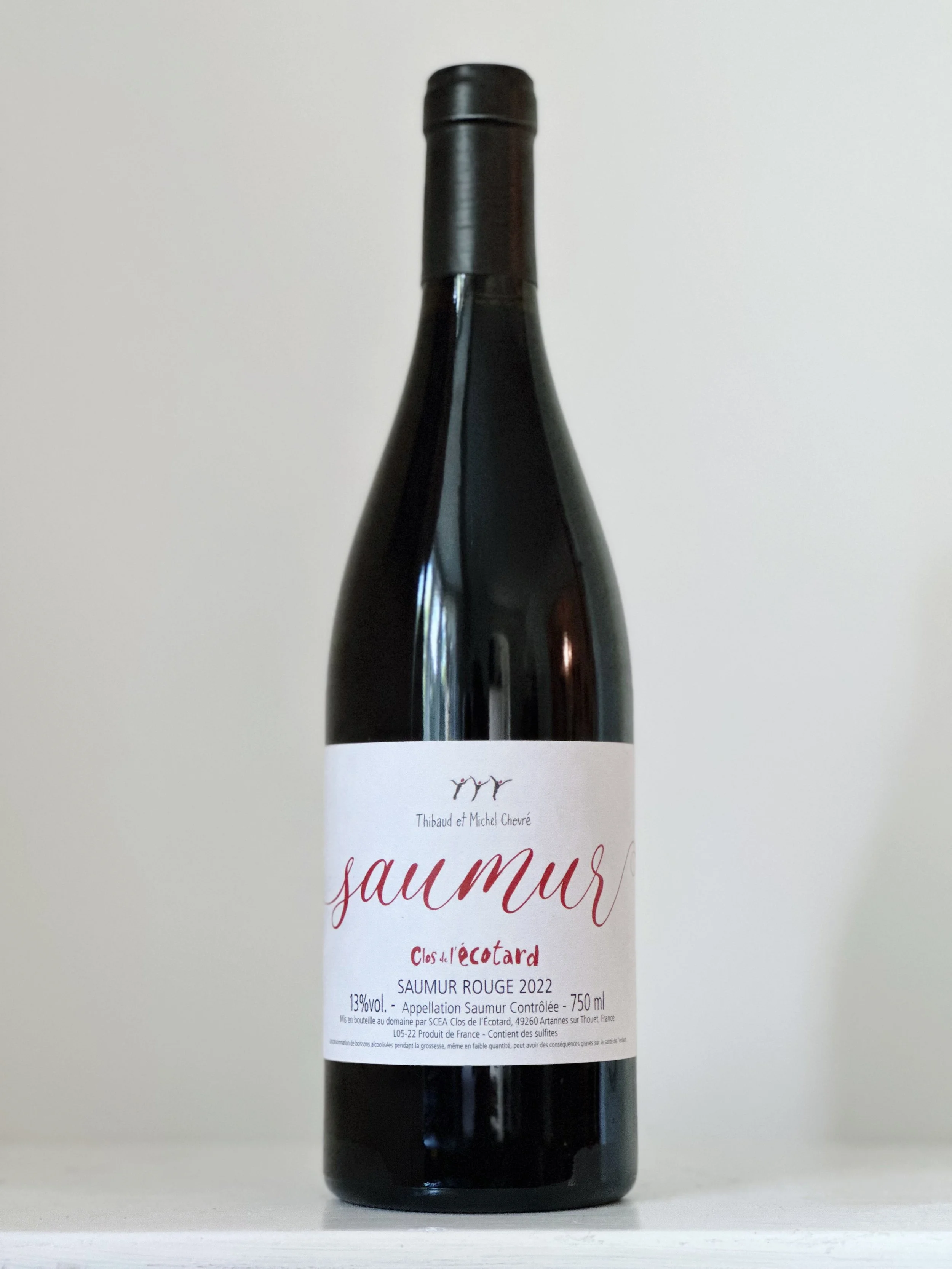
Configuration: (6 x 750mL)
Winery: Clos de l’Écotard
Appellation: Saumur, Loire Valley, France
Philosophy/Practices: Organic & biodynamic practices
Grape Variety: 100% cabernet franc
ABV: 13%
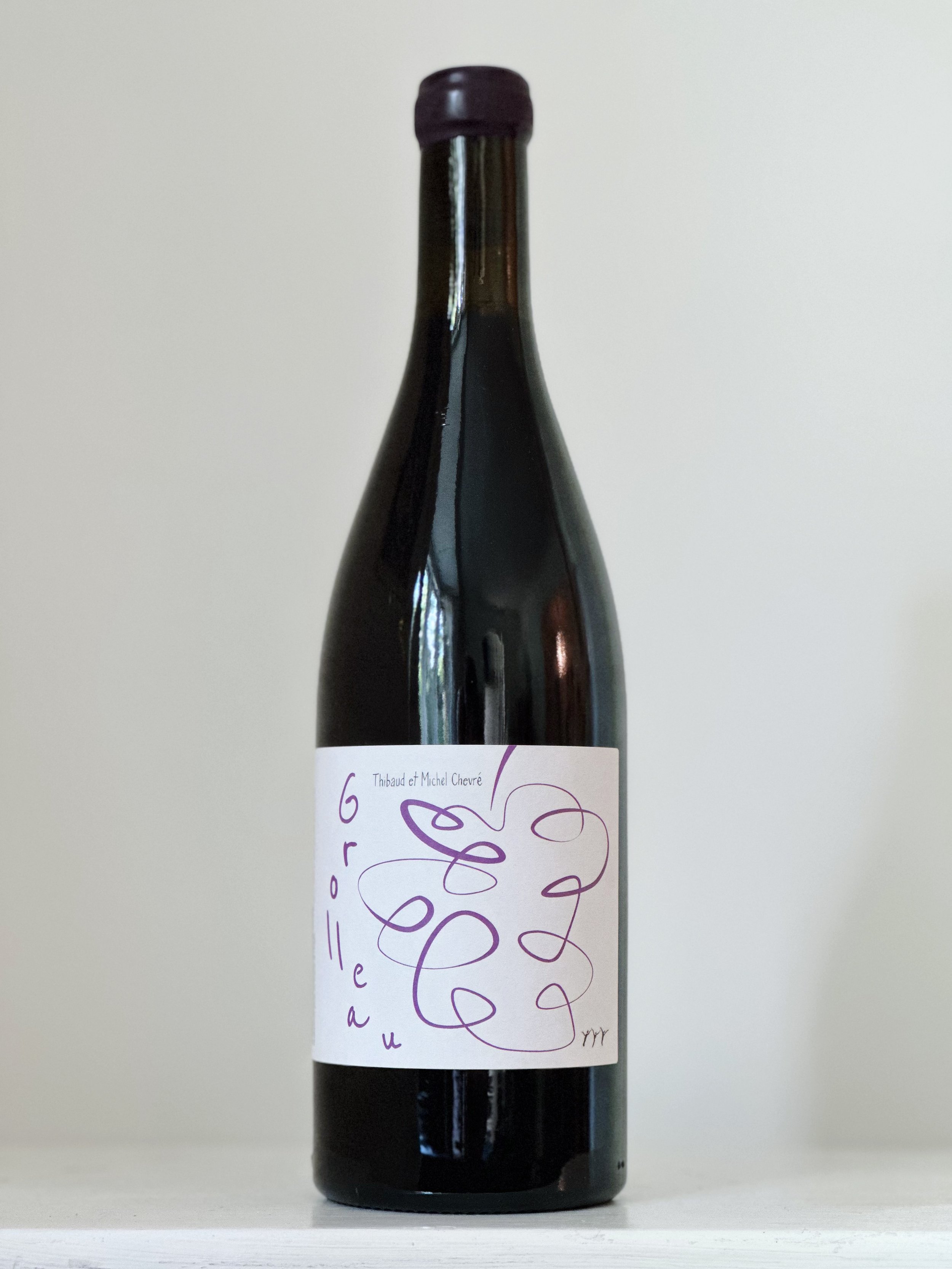
Configuration: (6 x 750mL)
Winery: Clos de l’Écotard
Appellation: Saumur, Loire Valley, France
Philosophy/Practices: Organic & biodynamic practices
Grape Variety: 100% grolleau
ABV: 12%
About Clos de l’Écotard
Michel Chevré is a giant of biodynamics in France. The agronomist at Domaine des Roches Neuves for decades, Michel is deeply respected in the world of biodynamic farming, his work helping to put the small region of Saumur on the map. Michel’s father was a grower before him, and sparked his interest in winemaking in the early 1990s. Now, Michel’s son, Thibaud, follows in his footsteps at the helm of their own Clos de l’Écotard.
The influence of Michel’s viticultural work – and that as a vigneron – cannot be overstated. So many young, extremely talented winemakers I meet in the Loire and far beyond credit him as a massive influence. So it was a very big thing when Michel inherited his family’s estate in 2007, and tapped Thibaud to begin working with him there. They started with just 3ha of vines that were part of the estate, converting them to organics in 2011 and crafting the first vintage of Clos de l’Écotard that same year. In the first years of winemaking, Michel and Thibaud used the cellars of Roches Neuves while Michel continued to work there, but as they rehabilitated their own cellar, they moved their practices over and were working fully out of their own estate, Clos de l’Écotard, by 2017.
The reputation of these wines preceded them from the beginning. I’d been hearing their acclaim through acquaintances in Paris and Beaune, so I jumped at the chance to meet and taste with Thibaud as soon as I could. Fortunately too, we’ve had some amazing opportunities to open some of the earlier vintages of Clos de l’Écotard whites, reds and sparkling wines… experiences that solidified for us the quality and pleasure these wines possess.
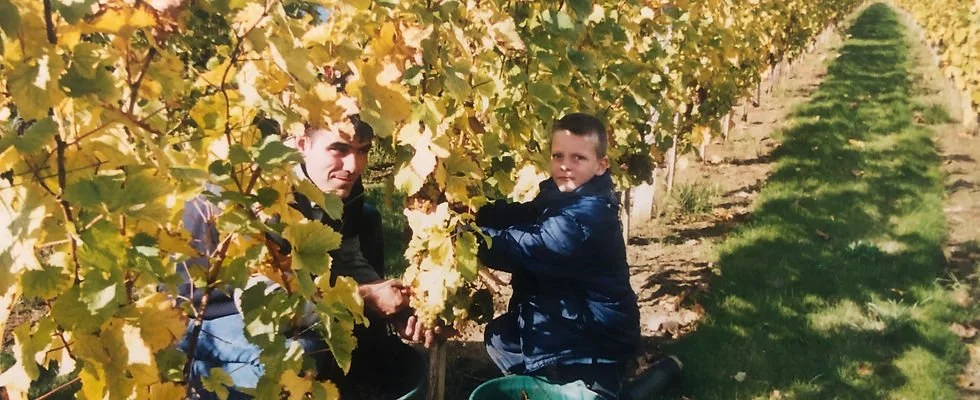
Michel & Thibaud Chevré harvesting grapes, 1990s.
From 2007-2011, in addition to transforming their family’s farm back into an agricultural ecosystem, the father-and-son duo also planted fruit trees, small crops, and more vines – and made an effort to maintain much of the surrounding natural landscape, with an understanding that the health of the whole farm is vital to the quality of grapes that will one day grow there. Since those early years, they’ve also purchased and restored small plots of old-vine vineyards in the villages of Courchamps, Fosse-Bellay and Saumur – with total acreage under vine now at 15ha. Production for Clos de l’Écotard is predominantly classic iterations of still, sparkling (and now a maceration!) Chenin Blanc, but there are also small amounts of Cabernet Franc, Grolleau Noir, Grolleau Gris, Sauvignon, Chardonnay and Gamay. To taste the breadth of these wines together is to be transported to the rolling hills of the pastoral landscapes here.
“The vineyards and the cellar are our laboratories, where we explore, understand, and innovate.”
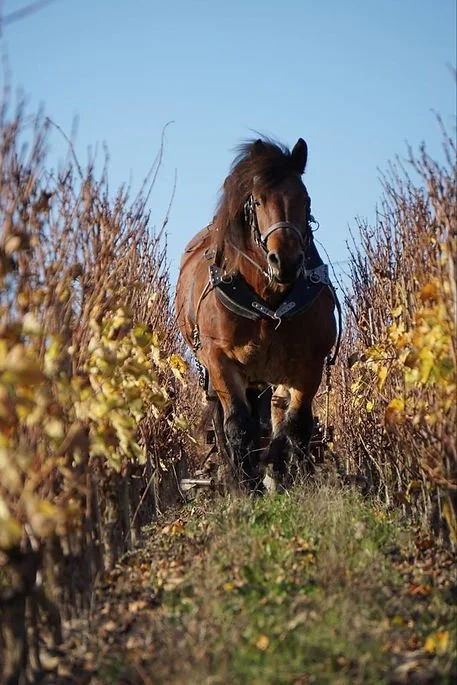
Fleur ploughing underneath vineyard rows.
Naturally, viticulture is of the utmost importance here and the Chevrés have worked fully organically since 2011. Soils are a complex and grapes were planted on the new sites based on soils, aspects and micro-climates. A key member of the small vineyard team is their draft horse, Fleur, who helps plough certain blocks. Other tactics like grassing (allowing a natural mulch in the rows between vines to promote soil health and microbial activity), vine rolling rather than pruning, and certain biodynamic preparations help the team work in harmony with the environment, and all of these decisions are tailored to every unique block they farm. Ultimately, farming at this level of nuance is done to achieve two things: to maintain and build the health of the environments that surround the grapevines; and to produce grapes of exacting balance and quality. It’s demanding, physical, but immensely rewarding work that leads to the ability to intervene as little as possible in the cellar.
“‘Quickly’ and ‘well’ are not on the same page of the dictionary. What I want to emphasize at the estate is attention to detail. If it’s necessary to take the time to do something well, we take it.”
Chenin Blanc (and the wines of this part of the Loire more broadly) is one of our desert-island grapes. It takes the shape of the soils, climate and weather that help to grow this variety each season, giving us expressions that can be lean like lightening on one hand; and broad, sultry and expressive on the other. For this very reason, the variety of Chenin cuvées at Clos de l’Écotard captured us from first sip, showing personalities from unique plots, both young and old. Not to mention their capacity to age with grace and patience.
The hands-off approach in the cellar yields Saumur Blancs that have soul and depth, and that take on beautiful, earthy complexities as they age. Michel and Thibaud’s sparkling wines are equally captivating, again showing a broadness while also the unmistakable tension and mineral that Chenin possesses. Reds here are spicy, textural, rustic and charming – and balanced with beautiful freshness.
Overall, the l’Écotard wines are some of the most exciting to come out of the region in the past 10 years, with writer for La Revue de France, Alexis Goujard praising that “these invigorating white wines rank among the finest in Saumur [with] the range further enhanced by their reds.”
Clos de l’Écotard: In the Vineyards
The Chevré family’s vineyards total 15 hectares. All are Certified Organic, with biodynamic practices employed to suit each site.
Le Clos de l’Écotard
Courchamps
The home vineyard, which is 2ha planted at high density to 100% Chenin Blanc from 2009 to 2013, enjoys a southeastern exposure on varying soils. It’s all farmed according to (Demeter) biodynamic practices, and divided into two distinctive blocks that create vastly different expressions of Chenin. The first, which grows primarily on clay-limestone, is the single block that comprises the Clos de l’Écotard Saumur Blanc cuvée. The second block sits on a hillside of mainly pure limestone outcrops; these grapes make up the Les Pentes Saumur Blanc cuvée. Like farming the two separate plots, guidance through winemaking is also tailored for each site. For the Clos de l’Écotard Saumur Blanc, grapes are hand-picked, slowly pressed, then fermented spontaneously, beginning in stainless steel and moved to big oak foudres where it completes fermentation. It doesn’t see malolactic conversion, and the resulting wine ages in foudres (up to 10% new) and sandstone (clay) jars made from the soils the grapes grow in. For Les Pentes Saumur Blanc, the hand-picked grapes are gently pressed directly into oak foudres, where the wine spontaneously ferments and then ages sur lie for 9 months, without any battonage.
Les Quarts Saint Vincent
Saumur
Les Quarts Saint Vincent is a block made of only nine rows of Chenin Blanc, and makes up Clos de l’Écotard’s top, single-vineyard sparkling cuvée of the same name. Northwest exposure here, and grapes are planted on clay-limestone at 5,300 vines/ha. This is a serious, linear, mineral-driven expression of sparkling Chenin: absolutely gorgeous wine.
La Haie Nardin
Courchamps
This is actually two incongruous blocks, just 0.7ha in total, planted at 4,500 vines/ha to old-vine Chenin Blanc (25-60 years old). It has a southeastern exposure, ensuring an ideal sun exposure on sandy-clay soils. This is one of the l’Écotard sites where vine shoots are rolled instead of pruned, and it’s farmed (Demeter) biodynamically. These make the third old-vine cuvée, La Haie Nardin Saumur Blanc. Grapes are hand-picked, slowly pressed, and fermented spontaneously. The resulting wine ages in (50%) oak foudres and (50%) stainless steel tanks for 9-11 months, only partially completing malolactic conversion.
Clos de la Chenaye / La Chenaye
Fosse-Bellay
This is an intricate, sandy soil site that’s planted to a number of grape varieties: Grolleau Gris (which goes into the Saumur Brut), Sauvignon, Gamay and Cabernet Franc (for the Saumur Rouge). Clos de la Chenaye is a warm, southwest-facing vineyard planted at 5,000 vines/ha and abuts right up to the medieval town of Fosse-Bellay. A few meters over lie a handful of rows of Grolleau, on a site called Chenaye. While it has the same exposure as the Clos, soils here become more of a clay-sandstone, creating Grolleau with great structure and aging potential.
Clos de la Huberdière / Le Long Rayage
Courchamps
Planted on clay-limestone, Clos de la Huberdière is an exciting, north-facing site that produces the Chenin cuvée of the same name. It also has small blocks of Chardonnay and Cabernet Franc – the latter of which goes into l’Écotard’s Saumur Rouge, adding spiciness and freshness from this block. The Chenin was planted most recently, making it one of the youngest sites at Clos de l’Écotard and already showing wonderful results. Le Long Rayage is a separate, congruous plot beside Clos de la Huberdière, also planted to Chenin and Cab Franc. The grapes from these blocks go into the Saumur Rouge and the Saumur Brut (direct-press Cabernet Franc and Chenin Blanc for the bubbles!).
Regional Spotlight: Loire Valley
The Loire Valley runs alongside the Loire River, which winds its way, for almost 1,000km, from the west coast through central France. Geographically it’s a massive region, with 87 delineated appellations that that spans along both sides of the 965km Loire River (and its tributaries) which runs from central France to its west coast. History of winemaking in the Loire Valley dates back to the 1st Century CE, and its wines have been held in high esteem throughout that period. It has a couple of nicknames, the Garden of France and Valley of the Kings, that paint a picture of the region.