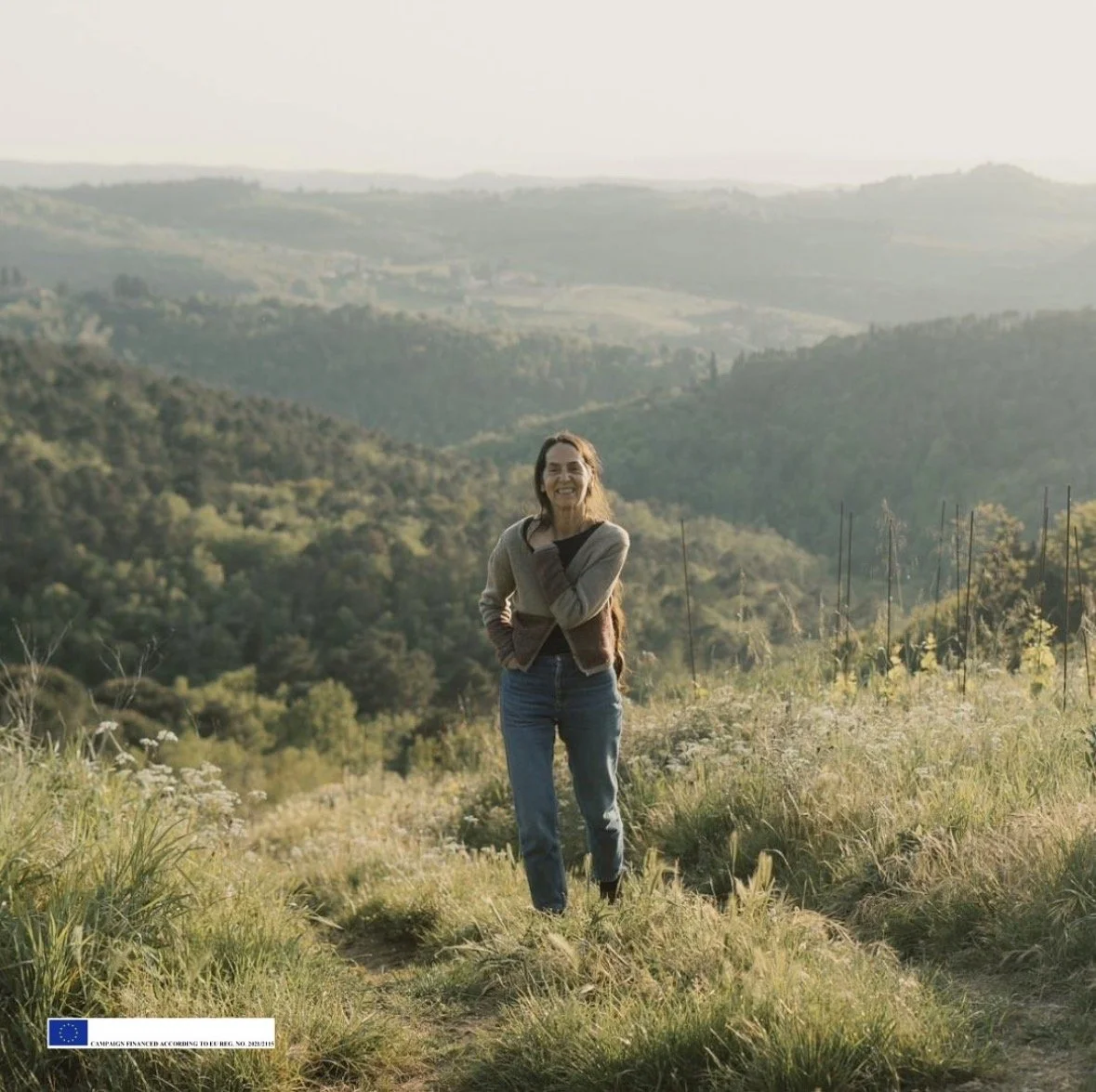
A family estate since the early 17th Century with a focus on organic farming and traditional winemaking, I Fabbri crafts incredibly aromatic and elegant Chiantis that speak of these Tuscan hillsides.
Susanna Grassi was destined to make wine. Her family has been the inhabitants of their Tuscan estate in the Lamole region of Chianti Classico since 1620. They were originally the local blacksmiths (“i fabbri”), and also winemakers – like so many families in this part of the world, they grew grape vines and olive trees that surrounded their estate. Today, Susanna leads a small team that makes some of the most distinctive and elegant wines in this part of Chianti Classico: lifted, long-lived sangiovese-based reds, a white, and a rosé that help to define – and also stand out from – one of the most prestigious corners of this famous region.
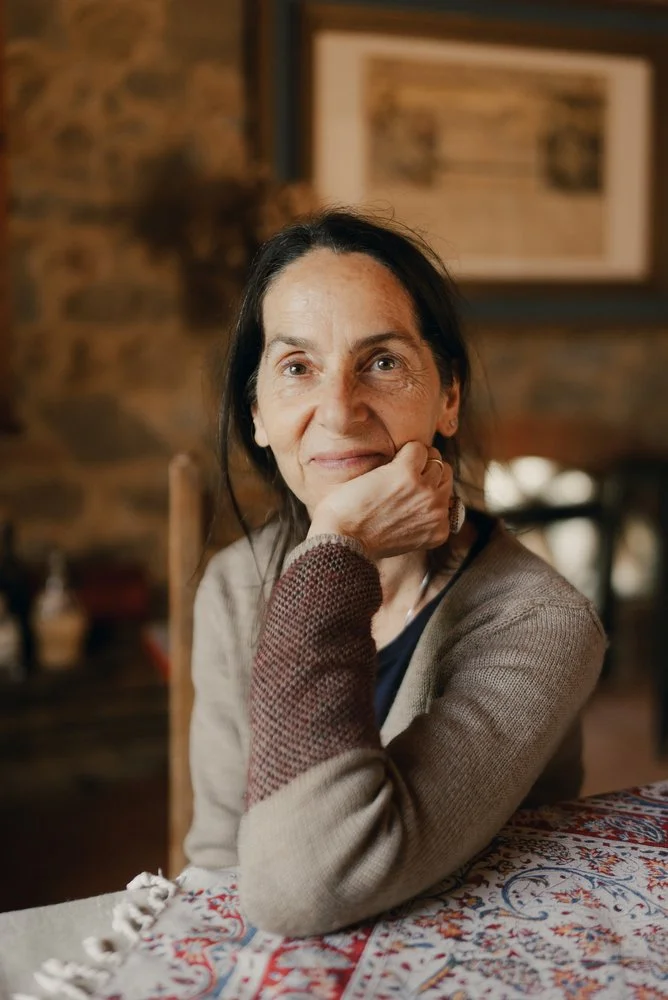
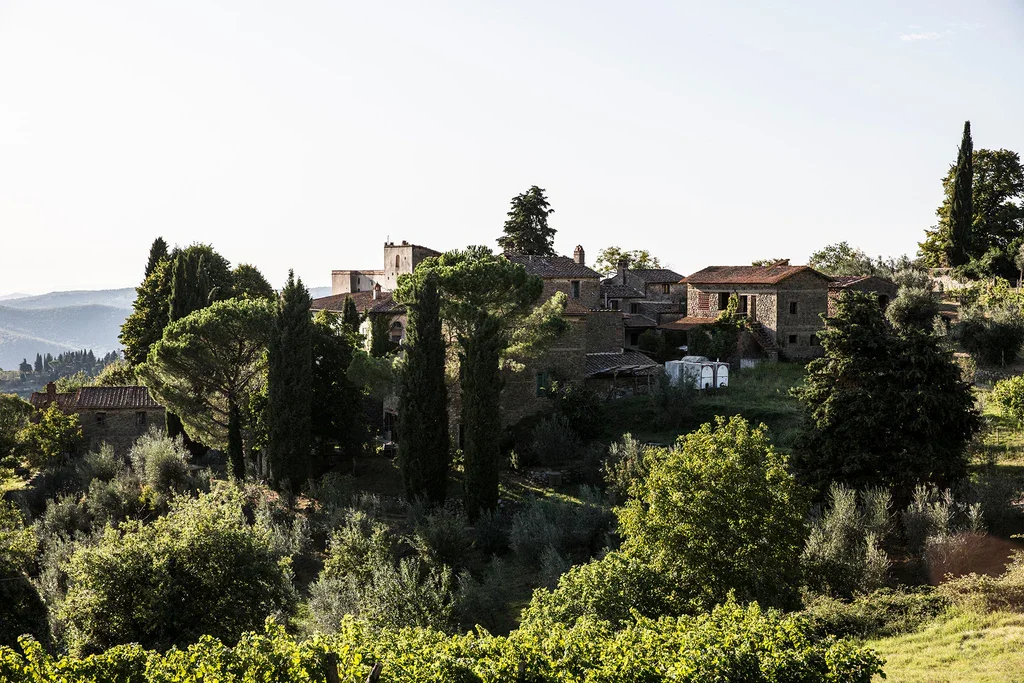
In her early adult life, Susanna’s path took her on a different trajectory: abroad and then to Florence, where she led a fast-paced career in fashion. In the late ‘90s she returned to her family’s estate and vineyards, which by then were in great disrepair but in which she could also see a breathtaking beauty. With a background in business and the nostalgic desire to restore the property where she grew up, she set out bringing life back to vineyards and villa alike, with a goal of making wines that spoke of the Lamole hills, in the way that her great-grandfather, Olinto, had generations before her.
At that time, Susanna was a mother of two small children, navigating the changes that motherhood brings, along with the task of revitalizing every aspect of her family’s estate. She was also a woman entering the deeply traditional Tuscan wine world, which to this day is dominated by men (read more about the few women who are holding space here). It was a profound leap.
“The return to the old property, so empty but always of a disconcerting beauty, rekindled my desire to resume those values & love for the land that had always accompanied my family.”
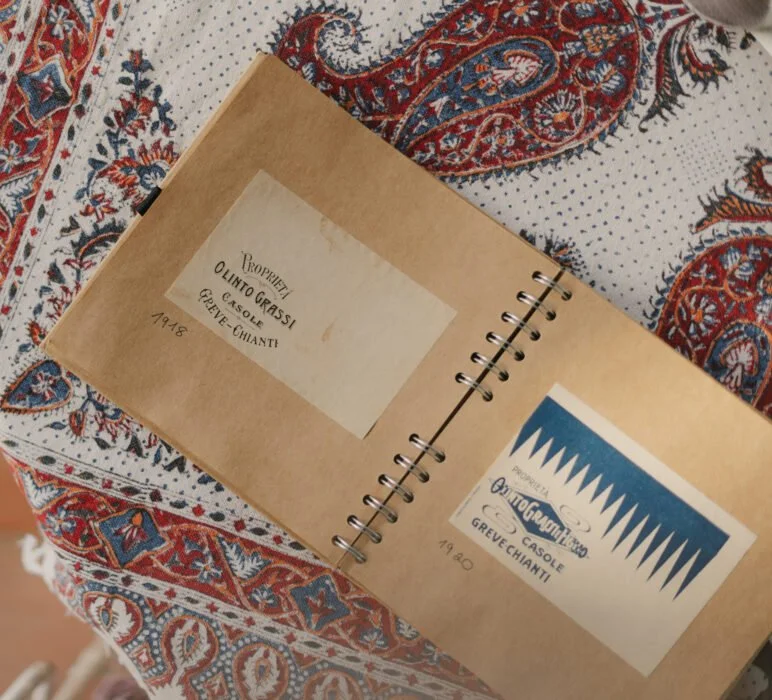
Winemaking is an important part of the Grassi family’s history. Olinto began selling his bottled wine in the 1920s, which was uncommon at that time. In fact, the labels that Susanna uses today are copies of the labels that Olinto created for his wines 100 years ago – a nod to his unique and pioneering vision. Susanna’s grandfather came next, who emphasized growing and selling the grapes for greater profit than selling their own finished wine. Her father took over in the 1960s, but his career led him outside of the wine world. Now, Susanna is the 11th generation to lead the estate.
The I Fabbri labels used by Susanna today are replicas of her great-grandfather’s wines 100 years ago.
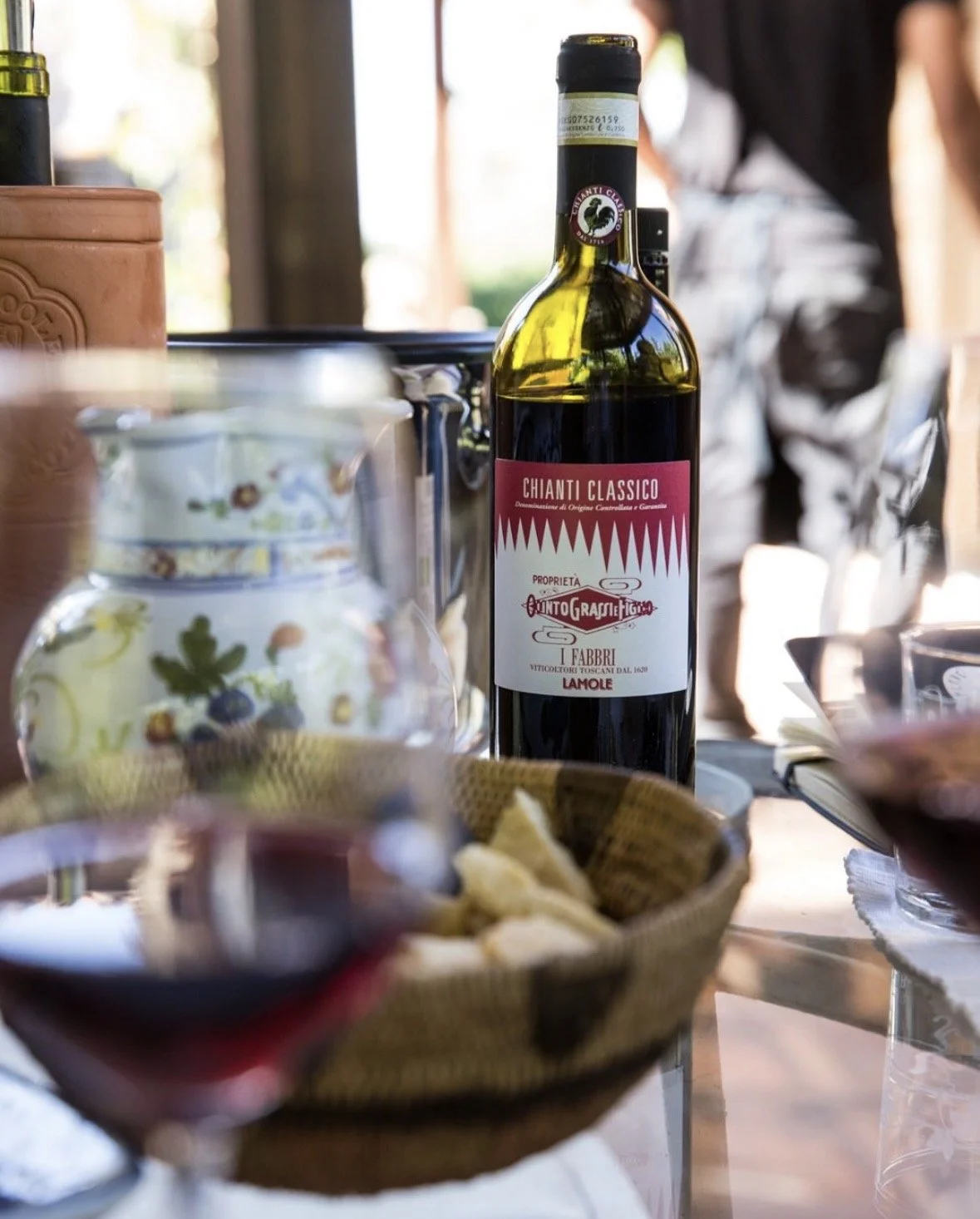
Restoration of Casole and its vineyards was painstaking, taken on by Susanna, her sister Maddelena and a small, dedicated team. It took years to rebuild the centuries-old terraces that the vineyards are planted on, as well as the home (Casole) and winery structures… let alone farming the vines to a quality beyond what they had ever seen before. Today, Susanna is one of the few women to own and lead an estate such as this in Tuscany.
The little sub-region of Lamole boasts some of the highest elevations in Chianti. I Fabbri’s 9ha of vineyards sit between 550-650m above sea level, planted on those ancient, restored terraces. The vineyards form a natural amphitheatre that stretch out and surround their beloved Casole estate; vines are Certified Organic and farmed along biodynamic principles. I Fabbri’s efforts in sustainability extend to the cellar, where energy saving measures are in place, winemaking by-products are reused, and lightweight glass bottles are used. Grapes are hand-harvested and wines are fermented spontaneously with indigenous yeasts in concrete; once vinified, wines age in concrete and large, neutral French oak.
This is winemaking that has remained unchanged since Susanna began over 20 years ago. To her, the fundamental task of the winemaker is to express territory, which must be done regardless of consumer’s taste. The wines of I Fabbri, in Susanna’s eyes, are purely (even more so, she would argue) wines of Lamole – showing finesse and elegance that the roots and elevation of this place allow – which are guided to fruition by her intuition and deep, deep respect for the land.
Currently Available from I Fabbri
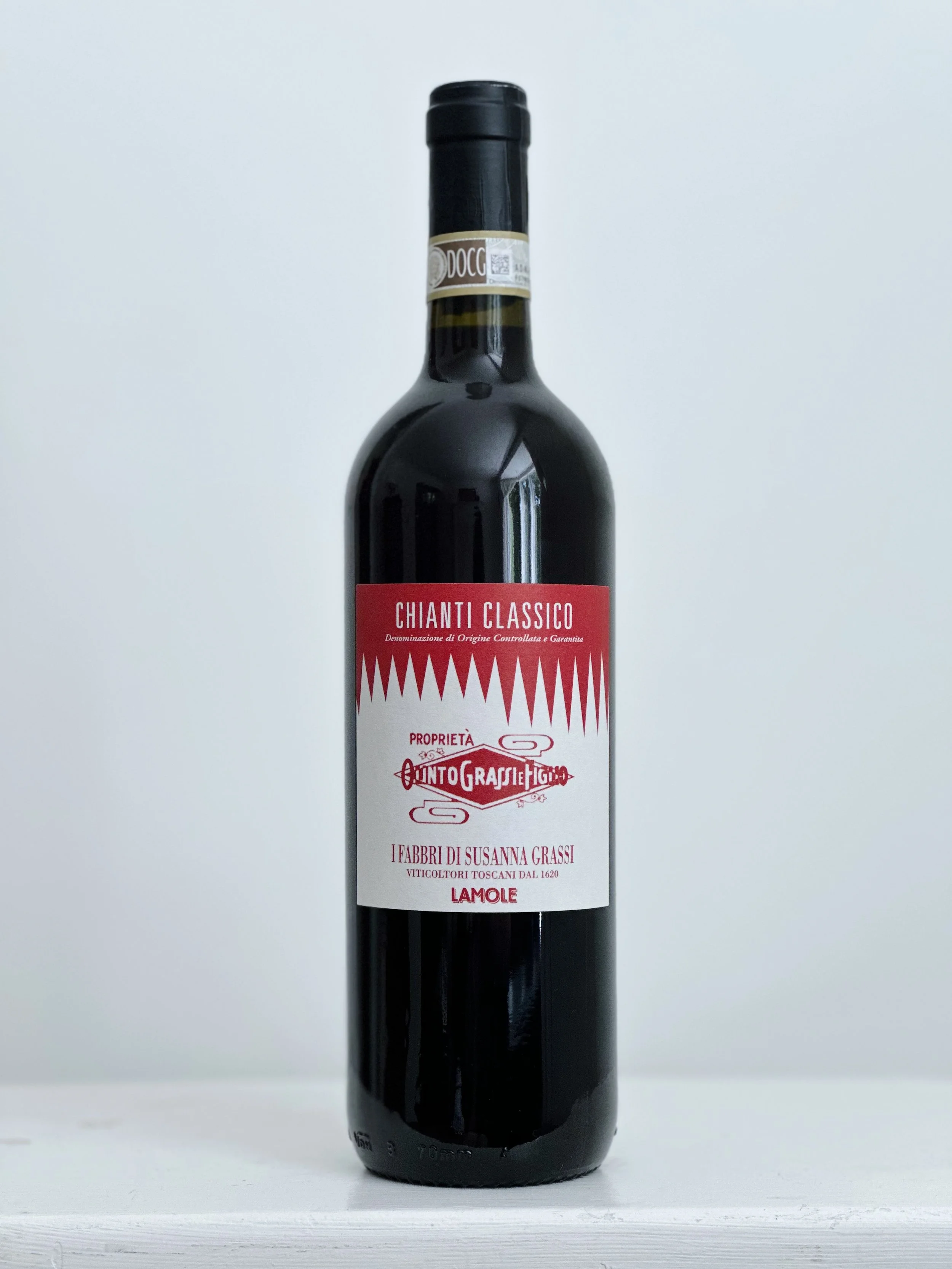
Configuration: (12 x 750mL)
Winery: I Fabbri
Philosophy: Certified Organic
Appellation: Chianti Classico DOCG, Lamole, Greve in Chianti
ABV: 13%
Why we love it: This is such a special bottle, and introduces the ethereal, singular wines of Susanna Grassi at I Fabbri.
This Lamole Chianti is made with 100% Sangiovese grown at 650m above sea level – the estate’s (and most of the region’s) highest vineyard elevations.
Grapes are manually harvested. Respecting their delicacy, the wine is fermented and aged (for 18 months) only in concrete tanks. All fermentations are spontaneous: slow and patient transformations.
The result is an exceptionally elegant, lifted Chianti – we guarantee you haven’t had one like this before.
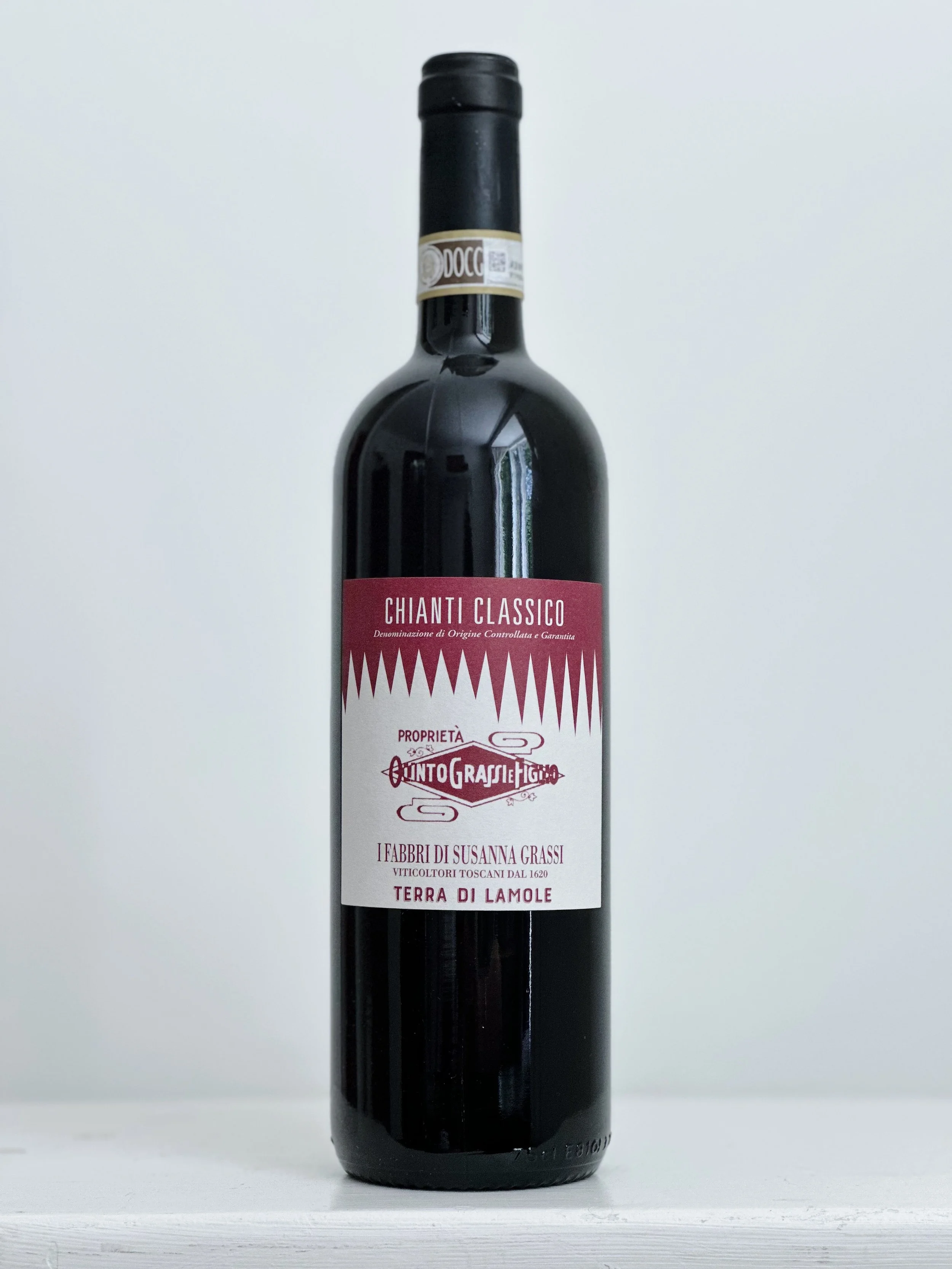
Configuration: (6 x 750mL)
Winery: I Fabbri
Appellation: Chianti Classico DOCG, Lamole, Greve in Chianti
ABV: 13%
Why we love it: This cuvée of Chianti Classico sees 10% Canaiolo with 90% Sangiovese, all old-vine fruit grown on Susanna’s organic, terraced vineyards at 550m above sea level. Some of our favourite Tuscan wines include Canaiolo: a once-dominant Tuscan variety that now typically plays second fiddle to Sangiovese. But it brings an added level of depth and heady aromatic complexity to Susanna’s high elevation reds, which we adore and which also lends to incredible aging potential.
Grapes are manually harvested, fermented in concrete, and then aged in a combination of concrete tanks and neutral French oak barrels for about 12 months. All fermentations are spontaneous: slow and patient transformations.
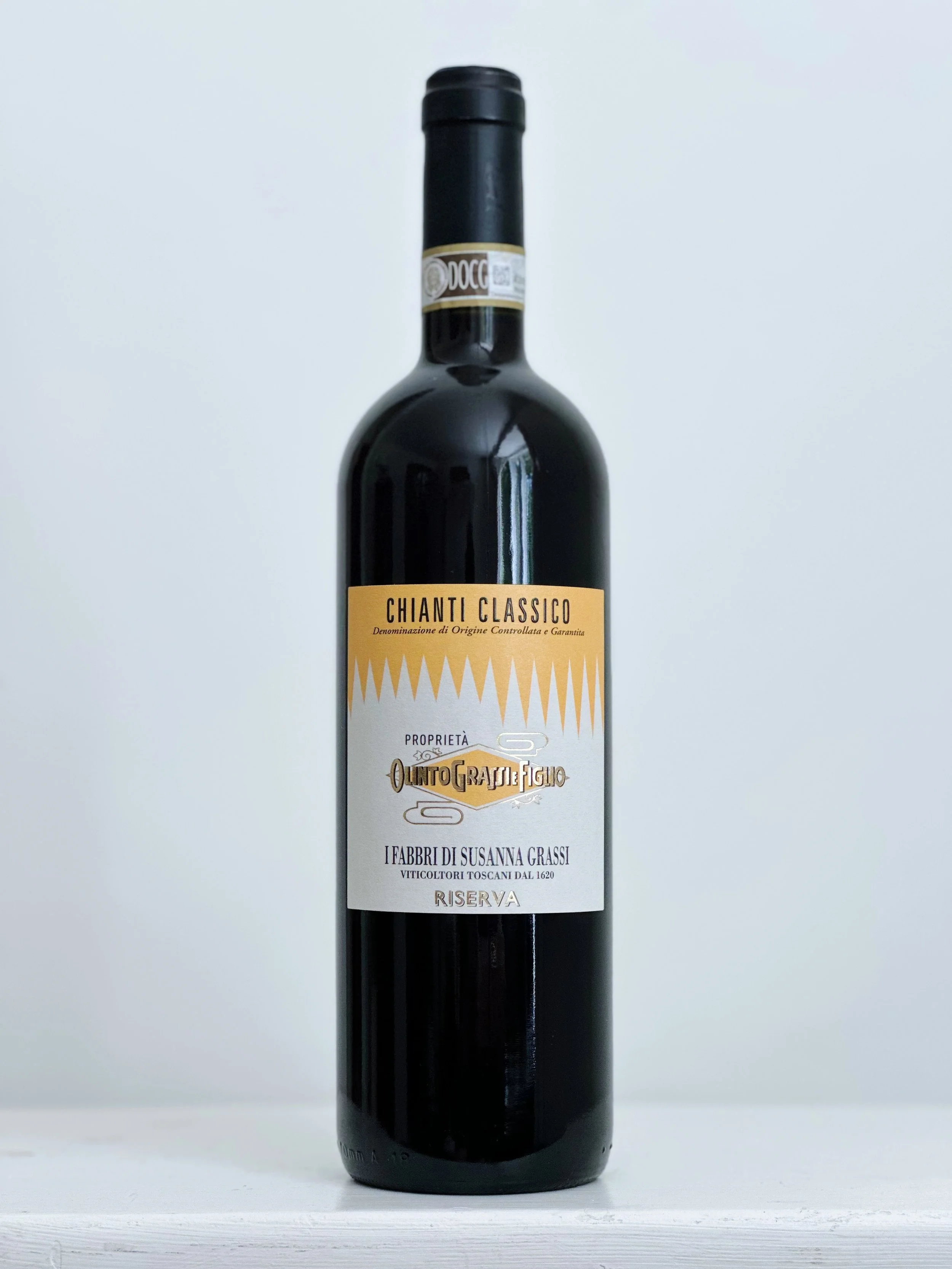
Configuration: (6 x 750mL)
Winery: I Fabbri
Appellation: Chianti Classico DOCG, Lamole, Greve in Chianti
ABV: 13%
Why we love it: Another of Susanna’s inimitable wines - one that you truly won’t find anywhere else. I Fabbri’s Chianti Classico Riserva is made with 100% Sangiovese Grosso di Lamole: a unique biotype of Sangiovese that is known and celebrated for its aromatic complexity, freshness and elegance. This is where the saying, i profume di Lamole (“the perfume of Lamole”) comes from. Vines growing from 550-650m are meticulously cared for through the growing season, and Susanna handles the grapes with the utmost care: her use of stainless steel and neutral French oak respects the fruit of the singular wine.
Grapes are manually harvested in the last two weeks of October. The wine fermented in stainless steel to retain fruit purity, pressed after 14 days, and then aged in large (500L) neutral French oak for only 10 months. All fermentations are spontaneous: slow and patient transformations.
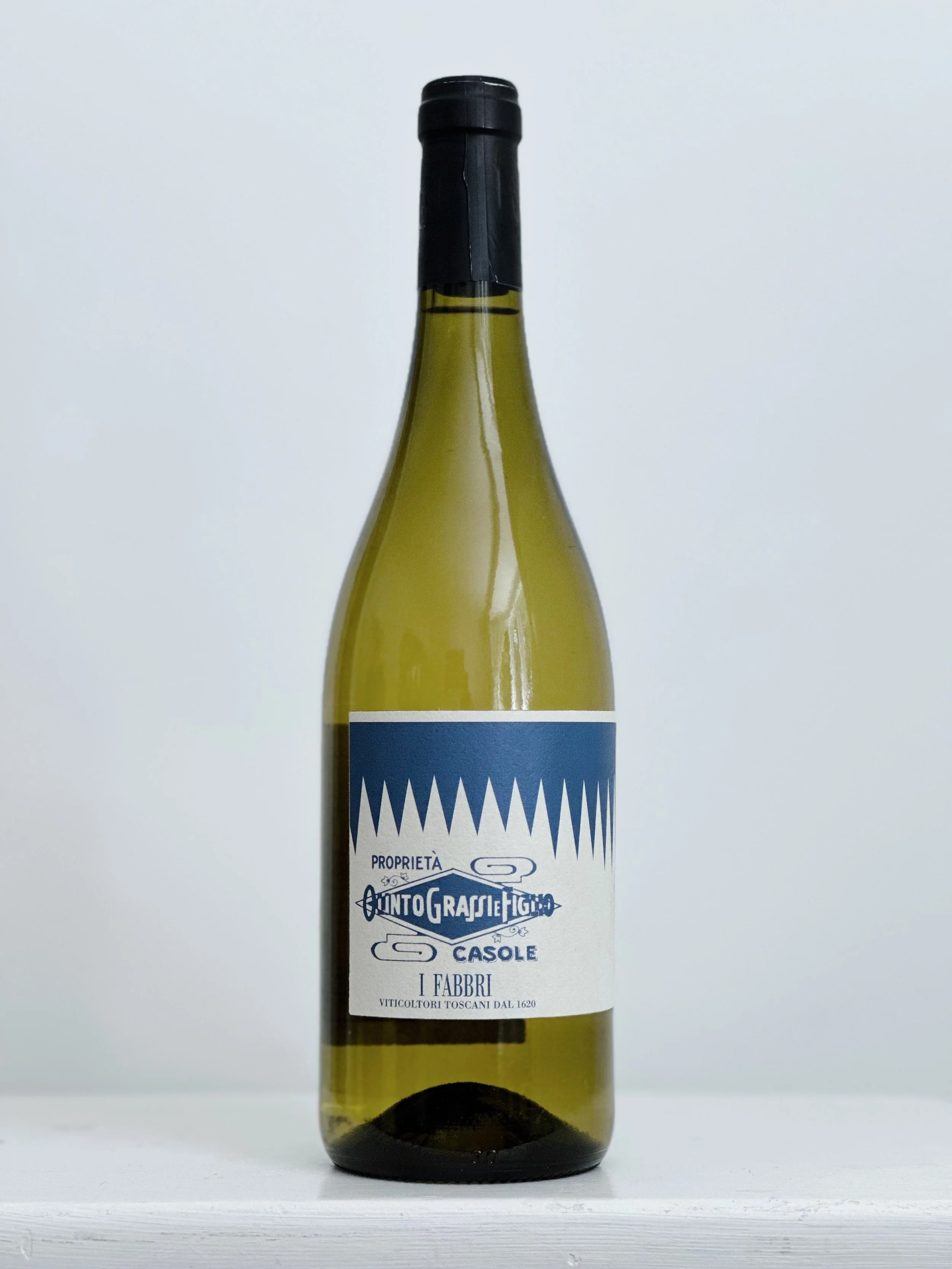
Configuration: (6 x 750mL)
Winery: I Fabbri
Appellation: Toscana Bianco
ABV: 12.5%
Why we love it: This wine beautifully introduces the range by Susanna Grassi in the picturesque, high-altitude hamlet of Lamole. It’s made from a snapshot of local white varieties: 40% Malvasia Lunga del Chianti, 40% Trebbiano Toscano, and 20% San Colombano, which together make a wine that is fresh and luminous. In a region dominated by red wines, this is a wonderful inflection of lightness. We also LOVE an Italian white – in typical fashion, this bone-dry with delicate fruit-meets-saline notes from start to finish.
Grapes are manually harvested, gently pressed and blended into a small concrete tank, where the wine fermented and aged. All fermentations are spontaneous: slow and patient transformations.
Given our limited allocation of I Fabbri’s Bianco Casole, we ask that any requests for this wine include 12 bottles of any of her Chianti Classicos.